Preventing Water Damage in Commercial Buildings: A Step-by-Step Guide
Last Updated: November 12, 2026
Quick Summary
Preventing water damage in commercial buildings starts with routine inspection of the roof, walls, windows, and plumbing, since water accounts for 57% of processed commercial property claims. Owners should map supply lines and shutoffs, clear drains and gutters before heavy rain, winterize exposed pipes, and install leak detection with a written response plan.
Water causes 57% of processed commercial property claims, according to Eddy Solutions.
Interior water-damage claim severity rose 8% from 2019 to 2023, per Verisk data.
Schedule drain cleaning before heavy rain seasons and clear gutters and downspouts.
Inspect visible pipes for drips, corrosion, and loose fittings each month.
Use IoT water sensors and automatic shutoff valves to stop leaks before they become floods.
Want fewer surprise leaks?
O & J Property Solutions LLC provides licensed, insured commercial maintenance with 24/7 emergency support.
Table of Contents
Preventing water damage in commercial buildings is one of the cheapest decisions an owner can make, and one of the most often postponed. Water is the leading cause of commercial property loss, accounting for 57% of processed claims, according to Eddy Solutions, State of Water Risk '26.
The bill is bigger than the repair invoice. Interior water-damage claim severity rose 8% from 2019 to 2023, based on Verisk data reported by Eddy Solutions. Costs keep climbing because damage spreads. Water soaks into drywall, insulation, flooring, and wiring before anyone notices a stain.
Here is what owners often underestimate:
Downtime: Tenants may lose use of space while crews dry and rebuild it.
Contents: Inventory, equipment, and records can be ruined.
Mold: Wet materials that are not dried quickly can grow mold.
Prevention is rarely glamorous. But routine inspection is far less costly than a flooded tenant suite on a Friday night.
Identifying Common Causes of Commercial Water Damage
Most commercial water losses come from a short list of sources. Knowing them makes your inspections faster and more useful.
Common sources include:
Roof leaks from worn membranes, clogged drains, or failed flashing
Burst or failed pipes, especially in older plumbing
Drain backups and blocked storm drains
Watch out: Hidden leaks behind walls or above ceilings can run for weeks before showing signs. Check water meters and look for soft spots, peeling paint, and musty smells, not just visible drips.
Protecting the Roof, Walls, and Windows
The building envelope is your first line of defense. Hanover Risk Solutions notes that protecting roofs, walls, and windows is essential to reducing the likelihood of water damage in commercial buildings, according to Hanover Risk Solutions, Water damage prevention for commercial buildings.
Focus your envelope checks on these areas:
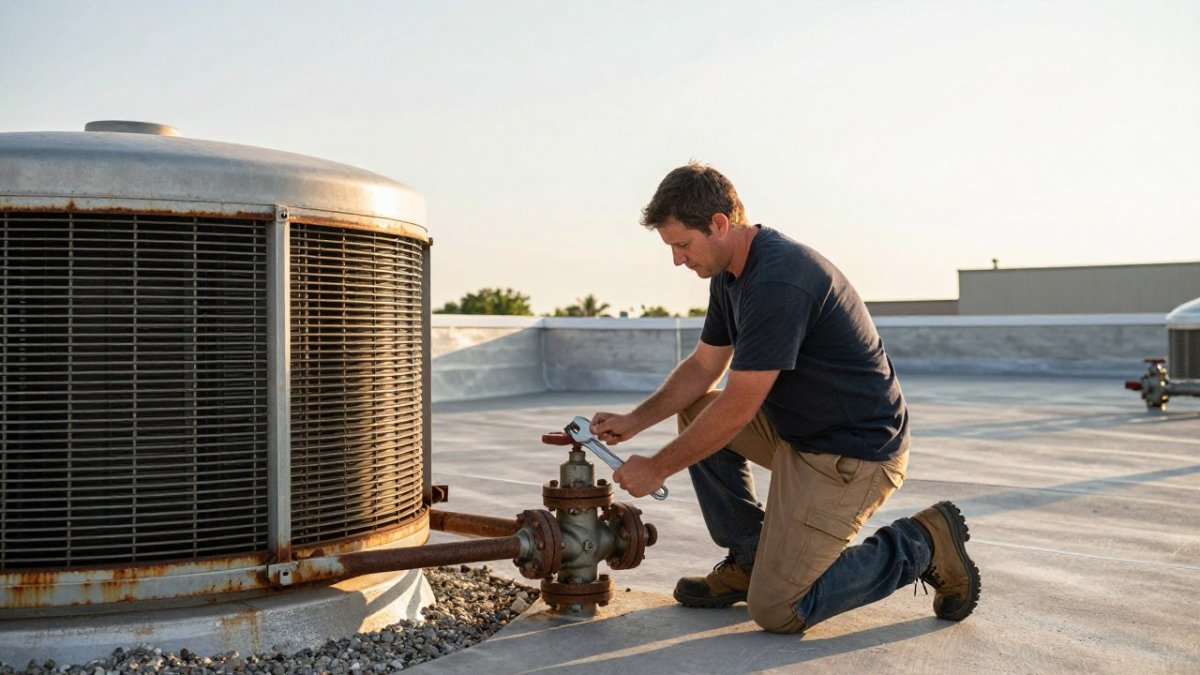
Roof membranes, seams, and flashing around vents and equipment
Gutters and downspouts that direct water away from walls
Window seals and caulking
If your building needs exterior work, contact O & J Property Solutions LLC to discuss envelope weak points before they turn into interior damage.
Step-by-Step Prevention Checklist for Commercial Plumbing
Work through these steps in order. Each one builds on the last.
Map every water supply line, drain, and shutoff valve in the building.
Locate and label the main water shutoff so staff can reach it fast.
Inspect visible pipes for drips, corrosion, and loose fittings each month.
Test pressure relief and backflow devices on your normal maintenance schedule.
Check water heaters and boilers for leaks and tank corrosion.
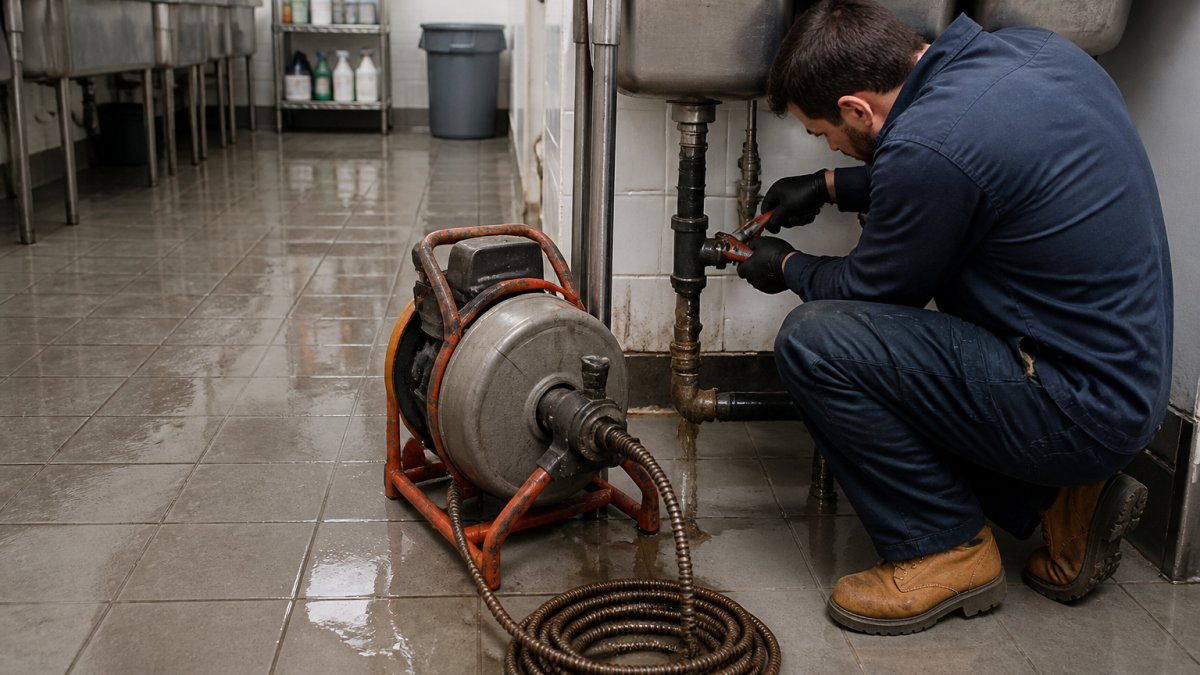
Confirm that all drains flow freely.
Record every finding and assign a repair deadline.
Drains, Gutters, and Downspouts
Blocked drains cause a surprising share of commercial water events. Lee Company recommends regularly inspecting and cleaning both indoor and outdoor drains to prevent clogs and backups, as described in Lee Company, Plumbing Maintenance: Preventing Water Damage in Commercial Buildings.
Schedule drain cleaning before heavy rain seasons. Clear gutters and downspouts so water exits away from the foundation.
Winterizing Pipes and Monitoring Temperature
Freezing temperatures can split pipes that sit in exterior walls or unheated spaces. Insulate exposed lines, seal gaps around penetrations, and keep heat running in vacant areas.
Temperature monitoring helps too. A sudden drop in a closet or mechanical room can warn you of a heating failure before pipes freeze.
The article's seven-step plumbing checklist is easier to act on when each step is paired with its timing.
Step | What to do | Time or frequency |
1 | Map every water supply line, drain, and shutoff valve | Not specified |
2 | Locate and label the main water shutoff | Not specified |
3 | Inspect visible pipes for drips, corrosion, and loose fittings | Each month |
4 | Test pressure relief and backflow devices | Normal maintenance schedule |
5 | Check water heaters and boilers for leaks and corrosion | Not specified |
6 | Confirm that all drains flow freely | Not specified |
7 | Record every finding and assign a repair deadline | Not specified |
Setting Up Commercial Building Water Leak Detection
Detection shrinks the damage window. Streamlabs describes IoT water sensors and automatic shutoff valves that detect leaks and stop water flow before a small problem becomes a flood, as explained in Streamlabs, Mitigating Water Damage in Commercial Buildings. Leak detection hardware also brings its own wiring and power needs, which are covered in our guide to complex electrical systems in commercial buildings.
Match the Sensor Type to the Risk
Most commercial systems combine three device types, and each covers a different failure mode:
Point (spot) leak sensors sit on the floor or in a drip pan and trigger when water bridges two contacts. They are inexpensive and best for predictable drip zones: under sinks, beside water heaters, beneath ice machines, inside mechanical rooms, and at the base of elevator pits.
Rope or cable sensors run along a floor or ceiling path and detect water anywhere along their length. Use them in long mechanical corridors, above suspended ceilings in tenant suites, and along the perimeter of data or electrical rooms where a point sensor would miss a traveling leak.
Flow-based and pressure monitors attach to the main line or a submeter and flag continuous flow when the building should be quiet, a running toilet at 2 a.m., a failed supply line, or a hose bib left open. These catch the hidden leaks that spot sensors never see.
A common pattern is to combine point sensors in high-probability drip zones with flow monitoring on the main and on any tenant submeters, so you get both a location and a building-wide backstop.
Place Sensors by Consequence, Not Convenience
Rank locations by what a leak would cost, not by how easy the device is to install. A practical priority order:
Main water entry, backflow preventer, and meter room
Water heaters, boilers, and any tank-type equipment
Mechanical rooms, pump rooms, and HVAC condensate lines
Elevator pits and shafts
Server rooms, electrical panels, and telecom closets
Break rooms, restrooms, and janitorial closets
Tenant suites with known plumbing chases or prior losses
Watch out: Sensors placed only where a leak has already happened leave the next failure uncovered. Rotate and add locations after every incident and after any tenant build-out that moves plumbing.
Wire Alerts to a Response, Not Just a Phone
An alert that reaches nobody is the same as no alert. Build the escalation path before you mount the first sensor:
Route alerts to a monitored channel, a building management system, a staffed dashboard, or a 24/7 answering service, not a single employee's personal phone.
Set a primary and a backup responder for business hours and after hours, and name a third contact for vacations and turnover.
Define response times by zone: immediate dispatch for mechanical, electrical, and elevator areas; same-day for low-risk spaces.
Integrate Automatic Shutoff Carefully
Automatic shutoff valves close the main when a sensor or flow monitor trips. They are the single biggest damage reducer in an unoccupied building, but they carry a trade-off: a false trip can cut water to fire sprinklers, cooling systems, or occupied tenant space.
Before enabling automatic shutoff, confirm which systems depend on the main line, whether the valve has a manual bypass, and how the valve behaves during a power or network outage.
Monitoring Unoccupied and Low-Traffic Areas
Vacant suites, storage rooms, and seasonal spaces are where leaks run longest. For those areas, rely on flow monitoring plus cable sensors tied to a remote dashboard, and add a weekly remote check to the schedule.

Building a Commercial Water Damage Response Plan
Even strong prevention cannot stop every leak. A written response plan keeps the first hour from going wrong, and the first hour determines most of the final bill. The plan should be short enough to post at the shutoff and specific enough that a night-shift employee who has never seen a leak can follow it.
Assign Roles Before You Need Them
Name people, not departments, and name backups for each role:
Incident lead, decides whether to isolate water, calls the restoration vendor, and owns communication.
Shutoff responder, physically closes the main or zone valve and confirms flow has stopped.
Floor warden or tenant liaison, moves occupants away from the affected area and relays instructions.
For multi-tenant properties, add a tenant contact list with after-hours numbers and a designated tenant representative for each suite. For single-tenant or owner-occupied buildings, the same roles can be combined, but each one still needs a named backup.
Write the Isolation Sequence
A leak response fails most often at isolation. Spell out the order:
Confirm the affected zone and whether the leak is supply-side or drain-side.
Close the nearest zone valve first; close the main only if the zone valve does not stop flow.
Shut off power to any wet electrical panel or equipment only through a qualified person.
Place containment, buckets, absorbent socks, plastic sheeting, under the leak and around floor drains.
Stop HVAC airflow into the wet zone to limit moisture spread.
Call the restoration vendor and the insurer per the contact list.
Watch out: Closing the main without knowing which systems depend on it can disable fire sprinklers or cooling. Post a simple schematic at the main showing what each valve controls, and update it after any plumbing change.
Standardize Documentation
Insurers pay faster when the record is complete. Require the documentation lead to capture, before cleanup begins:
Wide, mid, and close photos of the source and every affected material
A moisture reading log by room and material
A written timeline with times for detection, shutoff, vendor arrival, and drying start
Store the file in one shared location the insurer and adjuster can access, and keep it separate from routine maintenance records.
Pre-Qualify Restoration Vendors
Do not choose a restoration vendor during an emergency. Pre-qualify at least one primary and one backup vendor, and confirm in writing:
24/7 response and a stated on-site arrival target
Water extraction, structural drying, and mold remediation capability
Direct billing or assignment-of-benefits arrangements with major carriers
A common pattern is to review vendor agreements annually alongside the insurance renewal, so coverage terms and vendor capacity stay aligned.
Reduce Downtime Deliberately
Downtime is often the largest cost of a water event, larger than the repair. Build these into the plan:
Pre-identify alternate space for displaced tenants and a temporary power or equipment plan.
Keep a small emergency kit on site: absorbent socks, plastic sheeting, a wet/dry vacuum, flashlights, and printed contact lists.
Set a communication cadence, an initial notice within one hour, updates at agreed intervals, and a closure notice with the remediation summary.
Test the Plan
Review the plan with staff and tenants at least once a year, and run a short tabletop exercise: pick a realistic scenario, walk the roles through the isolation sequence, and time how long it takes to locate the shutoff and reach the vendor. Update contact lists, valve schematics, and vendor agreements after every exercise and every incident.
Scheduling Your First Preventive Maintenance Visit with O & J Property Solutions
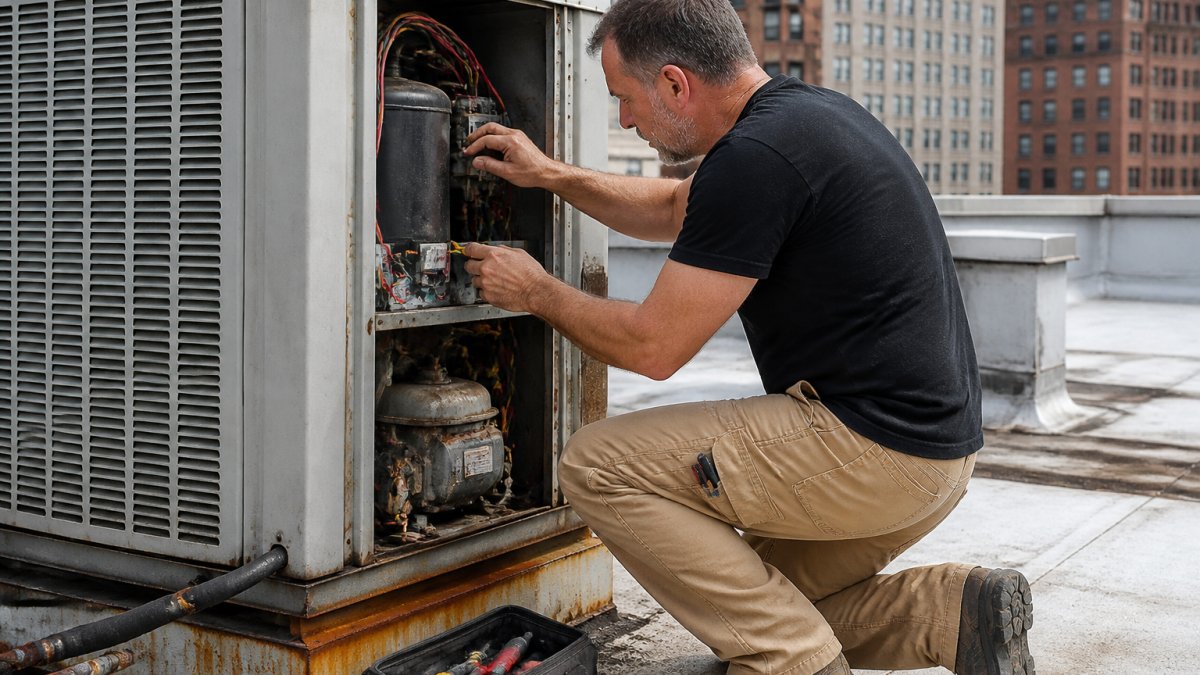
Start with a walkthrough of your property. Then build a routine schedule around what you find. Our crews handle commercial HVAC and electrical support, and we offer 24/7 emergency response for critical issues.
Ready to protect your property? Contact O & J Property Solutions LLC to schedule your first preventive maintenance visit, or call 209-679-2136.
Frequently Asked Questions
How quickly can water cause structural damage in a commercial building?
Water can begin damaging building materials within days if it is not dried out. Drywall, flooring, and insulation can soften and grow mold quickly, while wood framing and concrete can be weakened over longer periods of repeated wetting. Because the timeline depends on the material, the amount of water, and how fast it is removed, facility managers should treat any active leak as urgent. Shut off the water source, dry affected areas as soon as possible, and call a licensed contractor for an assessment if the damage extends beyond surface materials.
How often should commercial roofs and drains be inspected for water damage risks?
Most facility teams inspect roofs, gutters, and drains at least twice a year, typically in spring and fall, and again after severe storms. Interior and exterior drains should be cleared and checked for debris, since clogs are a common cause of backups. Keeping a written log of each inspection makes it easier to spot recurring problems and to show insurers that the building was maintained. Buildings in areas with heavy rain or freezing temperatures may need more frequent checks.
What should a business do when it discovers a water leak?
First, shut off the water supply to the affected line or to the building if the source is unclear. Next, photograph the damage and document the time it was discovered before cleaning up, since this record supports any insurance claim. Remove standing water and start drying the area with fans or dehumidifiers. Notify the property manager and call a licensed plumbing contractor to locate and repair the leak. Avoid discussing fault or cause with an insurance adjuster until the facts are documented.
Does commercial property insurance cover water damage from a foundation leak?
Coverage depends on the policy and the cause of the water. Many commercial property policies cover sudden and accidental water discharge, such as a burst pipe, but exclude gradual seepage, flooding, and groundwater entering through the foundation unless a separate endorsement is purchased. Review your policy wording with your insurance agent, keep maintenance records, and address drainage and grading problems early, since insurers may deny claims tied to long-term neglect.
Comments